What Is Osteopathic Manipulative Medicine (OMM)?
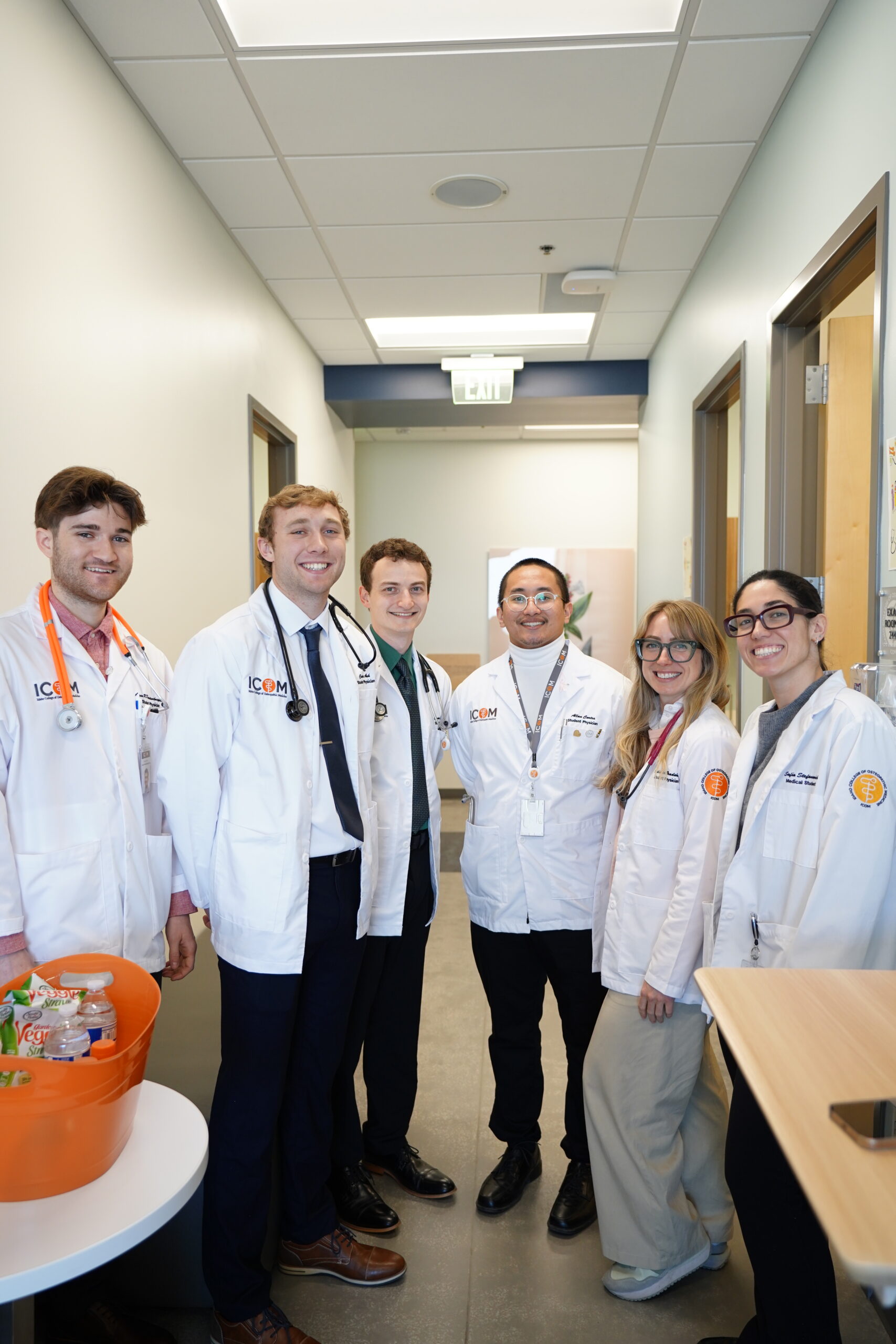
Written by the OMM faculty at Idaho College of Osteopathic Medicine, Meridian, Idaho. ICOM’s 94,000 square foot facility includes a dedicated OMM lab where students train in hands-on manipulative techniques under board-certified faculty supervision.
Osteopathic Manipulative Medicine is a specialized branch of medicine in which Doctors of Osteopathic Medicine use their hands to diagnose, treat and prevent illness or injury. OMM works by restoring proper motion to joints, muscles and connective tissue, supporting the body’s natural ability to heal. It is practiced by fully licensed physicians who completed the same foundational medical training as MDs, plus hundreds of additional hours of hands-on OMM training on top of that.
If you want the longer answer, here it is:
Osteopathic medicine was founded in 1874 by Andrew Taylor Still, MD, DO. Still was a frontier physician who watched conventional medicine of his era harm patients as often as it helped them and became convinced there was a better way to think about the human body. His core insight was that the body is not a collection of isolated parts but a deeply interconnected system, and that structural problems in the musculoskeletal system have real downstream consequences for physiology. That idea seemed radical in the 1870s. It has held up pretty well since.
The American Osteopathic Association codified Still’s philosophy into four foundational tenets. These are not decorative principles. They are the actual clinical logic behind what a DO does with their hands and why.
The first tenet holds that the body is a unit.
A person is an inseparable combination of body, mind and spirit and those three things influence each other constantly. Psychological stress produces physical tension. Structural dysfunction produces physiological symptoms. Treating one dimension of a patient while ignoring the others misses part of what is actually going on.
The second tenet holds that the body is capable of self-regulation, self-healing and health maintenance.
This one shapes how osteopathic physicians think about their role. The job is not just to administer treatments. It is to remove the barriers that are preventing the body from doing what it is already designed to do.
The third tenet is the one that most directly explains OMM.
Structure and function are reciprocally interrelated. How the body is put together affects how it works. A restricted joint, a pattern of fascial tension, a postural asymmetry, these are not just mechanical inconveniences. They affect nerve signaling, blood flow, lymphatic drainage and organ function in ways that show up as real symptoms. And it runs in both directions. Organic disease produces palpable changes in the neuromusculoskeletal system that a trained physician can feel with their hands.
The fourth tenet is the logical conclusion of the first three.
Rational treatment has to be grounded in an understanding of the body as a unit, in the body’s self-regulatory capacity, and in the relationship between structure and function.
Now here is some context on the scale of the profession these principles have produced, because a lot of people are surprised by the numbers.
As of the 2025-2026 academic year there are 207,158 osteopathic physicians and medical students in the United States. That represents a 1,721% increase since the AOA began tracking this data in 1935. There are currently 167,216 living osteopathic physicians actively practicing across the country. Osteopathic students now account for more than 25% of all U.S. medical students. About 38% of all military physicians are DOs. Nearly 70% of practicing DOs are under 45.
OMM is not a complementary therapy sitting alongside mainstream medicine. It is practiced by fully licensed physicians across every specialty in hospitals, primary care offices, emergency departments and sports medicine clinics throughout the country. What makes a DO different is the additional hands-on diagnostic and therapeutic training layered on top of a complete medical education.
At ICOM we train students in OMM across all four years of the curriculum in our dedicated OMM lab here in Meridian. It is not a separate track or an elective. It is built into the program from the beginning.
How Does OMM Work?
To understand what a DO is actually doing when they apply OMM, you need to understand one concept first. Structure and function are reciprocally interrelated. That is tenet three and it is the engine that drives everything else.
What it means in practical terms is this. The way your body is physically organized affects how it functions. A joint that cannot move through its full range of motion changes how surrounding muscles compensate. Those compensating muscles develop altered tension patterns. Those tension patterns affect blood flow and lymphatic drainage in the immediate area. The nervous system picks up on the dysfunction and starts signaling accordingly. What started as a mechanical problem in one location begins producing symptoms that can show up somewhere else entirely.
Osteopathic physicians are trained to find these dysfunctions with their hands before ordering imaging or prescribing medication. The diagnostic framework is called somatic dysfunction, and the way a DO identifies it comes down to four physical findings that go by the acronym T.A.R.T. Tissue texture changes, Asymmetry, Restriction of motion, and Tenderness. A palpable change in any of these tells the physician something about what is happening structurally in that area and why it may be producing symptoms elsewhere in the body.
This is where OMM separates itself from a standard clinical encounter. Most of medicine is trained to look at the body through labs, imaging and symptoms reported by the patient. OMM adds a fifth dimension which is the physician’s hands gathering information directly from the tissue itself. The goal, as AACOM puts it, is to remove anatomical barriers to motion, enhance the fluid dynamics of the lymphatic, vascular and cerebrospinal systems, and restore baseline physiological functionality through a whole-system evaluation.
The techniques that accomplish this fall into two broad categories. Direct techniques require the physician to actively position the affected area against its restrictive barrier and apply a corrective force. Indirect techniques move the patient away from the restriction into a position of ease, allowing the body’s own tension to normalize rather than forcing it. Which approach a DO uses depends on the specific dysfunction, the patient’s condition and what the tissue response indicates during treatment.
Picking between direct and indirect is never a coin flip. It comes down to what is actually in front of you. An elderly patient with osteoporosis and a healthy athlete with a stuck thoracic segment might look similar on paper but they are completely different situations and the hands know that before anything else does.
And honestly one of the things people miss about OMT until they actually experience it is that the physician is not just fixing a joint. The person on the table is breathing, their nervous system is active, their whole physiology is responding to what is happening in real time. The contact itself is doing something. Not just the technique, the actual sustained hands-on presence, which settles the nervous system, drops autonomic tone and creates conditions for the tissue to change in ways that go deeper than whatever mechanical correction is happening locally. That is why people who have been through an OMT session so often say it felt nothing like what they were expecting.
Common OMM Techniques — What DOs Actually Do
One of the things that surprises people when they first learn about OMM is how varied the techniques actually are. There is no single thing a DO does with their hands. The toolkit spans from rapid high-velocity thrusts to techniques so gentle the patient can barely feel them happening. What connects them is the underlying diagnostic reasoning, not the force applied.
High-Velocity Low-Amplitude (HVLA)
This is probably the most recognizable OMM technique because it is the one that sometimes produces an audible pop. HVLA involves a rapid, short-distance thrust applied to a joint that has been precisely positioned at its restrictive barrier. The goal is to engage and overcome that restriction and restore the joint’s normal range of motion.
The physiological mechanism behind it is more interesting than the sound. According to PMC research on OMT techniques, the rapid thrusting motion stretches contracted periarticular muscles, which triggers a barrage of afferent signals from muscle spindles to the central nervous system. The CNS responds by reflexively relaxing the hypertonic muscle, which is what actually restores the joint motion. The audible cavitation, when it occurs, is a byproduct of gas release in the joint space. It is not required for the technique to work.
HVLA is most commonly applied to the cervical, thoracic and lumbar spine and the lumbosacral junction. It has specific contraindications that a DO screens for carefully before applying it, which we cover in the safety section below.
Muscle Energy Technique (MET)
MET is a technique that involves the patient actively participating in their own treatment, which tends to surprise people the first time they experience it.
The physician positions the dysfunctional joint exactly at its restrictive barrier and then asks the patient to contract a specific muscle against a precisely applied counterforce. That counterforce can be isometric, meaning the joint does not actually move, or isotonic, meaning it does. The sustained isometric contraction activates this sensory receptor, which induces post-isometric relaxation in the muscle, reducing hypertonicity and elongating shortened fibers. This allows the physician to move the tissue to a new barrier and repeat the process until normal function is restored.
MET is versatile, gentle enough for most patients and particularly effective for muscle imbalances and joint restrictions that have developed gradually over time.
Strain-Counterstrain (SCS)
Developed by Dr. Lawrence Jones in 1955 after he accidentally discovered a position that relieved a patient’s severe refractory back pain that had not responded to anything else, SCS is one of the more elegant techniques in the osteopathic toolkit.
The physician identifies a myofascial tenderpoint, a discrete highly localized area of maximal tenderness in the tissue, and then passively moves the patient into a position of maximum comfort, moving deliberately away from the restriction rather than toward it. The patient holds this position of ease for about 90 seconds. According to StatPearls, what happens during those 90 seconds is that aberrant proprioceptive reflexes from muscle spindles that have been maintaining an involuntary muscle spasm are suppressed. When the position is slowly released, resting muscle tone normalizes and joint mobility is restored without any force being applied.
SCS is particularly useful for patients who cannot tolerate more direct approaches, including acutely painful presentations and fragile populations.
Myofascial Release (MFR)
Fascia is the connective tissue that wraps around every muscle, organ and structure in the body. It is continuous throughout, which means restrictions in one area can pull on and affect areas far removed from the original problem. MFR addresses exactly this.
The physician applies continuous palpatory feedback to the restricted fascial tissue, either engaging the barrier directly or moving into the direction of ease depending on the clinical judgment in the moment. According to WVSOM’s OMT methodology resources, the technique alters the mechanical properties of the fascia through cellular mechanotransduction, reducing overall fascial tension and subsequently improving local vascular and lymphatic circulation. The effects are not limited to the site of application because fascia is a system, not a series of isolated segments.
MFR tends to be one of the techniques patients describe as deeply relaxing even when it is being applied to an area that was previously painful.
Balanced Ligamentous Tension (BLT)
BLT is an indirect technique used specifically for ligamentous joints including the pelvis, shoulder, knee and elbow. The physician brings the ligamentous tissues to a state of precise directional equilibrium, using either short levers like contact on a vertebral spinous process or long levers like the entire limb to guide the joint toward its position of ease.
According to a review published in Medicines, a successful therapeutic release is characterized by a palpable sensation of warmth, tissue unwinding and restored motion as the underlying restriction lessens. Patients often describe a spreading warmth through the area being treated during BLT, which reflects the improved circulation that follows the release of ligamentous tension.
Lymphatic Pumping Technique (LPT) and Rib Raising
So lymphatic pumping and rib raising are weird ones because they have nothing to do with joints or cracking anything. Your lymphatic system has no pump. It needs movement to work. When someone is sick or stuck in a hospital bed things slow down and fluid just sits there. What the physician does is manually recreate the pumping action that normally comes from your muscles moving around. Lymph nodes start clearing stuff faster. Inflammatory material, immune cells, infectious organisms, all moving through the system instead of sitting stagnant. There is actually a famous pneumonia study called the MOPSE trial where they did this on hospitalized elderly patients and the results were pretty remarkable, shorter hospital stays, lower mortality in the sickest patients, less time on IV antibiotics. We go into the numbers later.
Rib raising is gentler than it sounds. Both sides of the thoracic cage, improving rib movement, influencing the sympathetic chain ganglia that sit right in front of the rib heads. Tolerable enough to use on anyone, including pregnant women and bedridden patients. In pregnancy specifically it has been shown to shorten labor and help with breathing mechanics, which is meaningful because treatment options during pregnancy are already pretty restricted.
Cranial Manipulative Medicine
Now cranial osteopathy is the one where I want to be straight with you rather than just describing it like the others. The theory is that cranial bones have a tiny range of motion driven by cerebrospinal fluid and that manipulating that motion helps patients. Some animal studies have pointed toward interesting effects on brain fluid circulation. But the human clinical trial data has not held up.
A 2024 meta-analysis went through 24 randomized controlled trials with over 1,600 patients and found no significant treatment effects. A 2016 systematic review of over 1,200 references found that different practitioners cannot reliably agree on what they are feeling when they palpate the cranium, which is a pretty serious problem for a diagnostic technique. It gets taught widely and many practitioners believe in it. The evidence just is not there the way it is for the other techniques and you should know that going in.
What Conditions Does OMM Treat?
Low back pain is where most people first encounter OMT and honestly it is where the evidence is strongest too. The American Osteopathic Association formally recommends it as a frontline intervention for both acute and chronic non-specific low back pain at Evidence Level 1a, which is the highest tier of clinical evidence that exists. A 2014 meta-analysis pulled together 15 randomized controlled trials and found statistically significant improvements in pain and functional status at three months. The PACBACK Trial, which followed 1,000 patients, showed spinal manipulation combined with supported self-management matches or exceeds guideline-based medical care for patients at high risk of developing chronic disabling back pain.
Neck pain and headaches are right behind low back pain in terms of evidence. A 2015 meta-analysis found manual therapy produces greater short-term relief for chronic neck pain than exercise alone, and when combined with exercise it produced meaningful long-term functional improvements for acute whiplash injuries. For headaches, systematic reviews show multimodal OMT reduces frequency and severity and improves quality of life, though the certainty of that evidence is lower than for back pain because individual studies tend to have smaller sample sizes.
Pregnancy is another area where OMT has been studied carefully and where the results are genuinely interesting. The treatment findings are what you would expect, OMT reduces pain and improves quality of life through the third trimester. But the prevention finding is more striking. Large-scale epidemiological data showed that high-intensity OMT use before conception reduced the subsequent risk of pregnancy-related low back pain by nearly 30 percent. That is not treatment. That is osteopathic medicine’s preventive philosophy producing a measurable clinical outcome before a problem has even started.
Fibromyalgia is harder to treat than most conditions and the pharmacologic options are limited. What the research shows is that combining OMT with standard medical care produces statistically significant improvements over standard care alone, including elevated pain thresholds, better daily function and reduced depressive symptoms. One case report documented pain dropping from 7 out of 10 at baseline to 2 out of 10 with the improvement holding at eight weeks. That is not a controlled trial but it is a real clinical outcome worth knowing about.
Musculoskeletal pain affects roughly 1.7 billion people globally and is one of the leading causes of chronic disability worldwide. What OMT does for these conditions is address the mechanical drivers of pain in ways medication alone cannot reach. It does not replace pharmacology or surgery when those are genuinely what a situation calls for. What it does is work on a layer of dysfunction that other interventions often leave completely untouched, and for the conditions above the evidence for doing that is real.
Is OMM Safe?
For most patients, yes, and the data behind that answer is actually quite specific.
A synthesis of 23 clinical studies established an adverse event rate of exactly 1.0 adverse events per 100 post-OMT interval-days. Of those, 98 percent were classified as mild. Transient local soreness after treatment, some muscle stiffness, general fatigue, mild myalgias that show up in the day or two following a session. The kind of things you might feel after a deep tissue massage or a hard workout. Serious or life-threatening adverse events were essentially absent across the large-scale systematic reviews that have examined this question.
Women reported mild adverse events at a statistically higher frequency than men with an odds ratio of 13.9, which is worth knowing if you are a female patient going into a first OMT session and wondering why you feel a bit sore the next day. It does not reflect any difference in how the treatment was applied. It reflects a documented difference in how post-treatment tissue responds.
Now the important qualifier. Not every technique is appropriate for every patient and HVLA in particular has specific absolute contraindications that a DO screens for carefully before applying it. Acute fractures, bony malignancy, active osteomyelitis, severe osteoporosis, spinal cord compression, acute myelopathy, cauda equina syndrome, vertebrobasilar insufficiency, cervical artery abnormalities, aortic aneurysm, Down syndrome due to atlantoaxial instability, rheumatoid arthritis, Chiari malformation and ankylosing spondylitis are all situations where HVLA should not be applied to the affected region.
What is worth understanding about that list is what happens when HVLA is contraindicated. The DO does not simply stop treating. They shift to gentle indirect methods. BLT, facilitated positional release, myofascial release. These techniques have near-universal tolerability across pediatric patients, fragile geriatric populations and oncologic patients. The diversity of the OMT toolkit is part of what makes it clinically viable across such a wide range of patient presentations.
The overall safety picture that emerges from the research is of a therapeutic modality with a low adverse event burden, mild and transient when events do occur, and a well-defined contraindication framework that allows trained physicians to select appropriate techniques for each patient. That profile is part of why OMT has been studied in populations where other interventions carry too much risk, including hospitalized elderly patients, pregnant women and pediatric oncology patients, and why it continues to expand into clinical settings where non-pharmacologic options are most needed.
OMM Beyond Back Pain — What Else Can It Do?
Back pain and neck pain get most of the attention when people talk about OMT and that makes sense because that is where most of the research has been done. But here is something that surprises a lot of people when they first learn about it.
There is a study that followed over 400 hospitalized pneumonia patients across seven hospitals. The patients who received OMT alongside standard treatment had lower mortality in the oldest and sickest group, shorter hospital stays and needed IV antibiotics for less time. That last part is worth sitting with for a second. Reducing how long hospitalized patients need IV antibiotics is not just a cost issue. Antimicrobial resistance is one of the most serious problems in modern medicine and a hands-on intervention that helps patients clear an infection faster without extending antibiotic exposure is genuinely significant. What the OMT was doing in those patients was lymphatic work. Rib raising and pumping techniques that help the body move inflammatory material and infectious organisms through its own immune system faster than it would on its own.
Middle ear infections in kids are another one that comes up in the research. A pilot study found that children receiving OMT alongside standard care resolved their middle ear fluid at nearly twice the rate of standard care alone by the third week of treatment. The hands-on work there is targeted at the cervical fascia and cranial structures around the Eustachian tube, helping it drain the way it is supposed to rather than staying congested.
There is also a study from a major children’s hospital that looked at OMT for kids going through cancer treatment. Not about curing cancer obviously but about managing the side effects. Chemotherapy pain, headaches, neuropathy, constipation, nausea. What the study showed is that OMT is safe and workable even in kids who are immunocompromised, which matters because that population really needs non-pharmacologic options and does not always have good ones.
For IBS the research shows meaningful reductions in abdominal pain and constipation from visceral osteopathic work but the evidence quality is low and the diarrhea findings were inconclusive. Worth knowing about, not worth overstating.
Asthma is the one where the evidence falls shortest. OMT can improve how the chest wall moves during an exacerbation but it has not been shown to change the underlying airflow obstruction that defines asthma. The musculoskeletal component of breathing, yes. The bronchospastic mechanism, no. That is an important distinction and the research is honest about it.
The thread that runs through all of this is the same one that runs through the whole osteopathic philosophy. OMT does its best work when the problem involves something hands can directly influence. Fluid movement, mechanical restriction, autonomic tone. When the primary issue is an inflammatory cascade or a disease process that pharmacology is designed to address, OMT plays a supporting role at best. A good osteopathic physician knows that distinction and it shapes how they decide when to use it.
OMM in Sports Medicine and Athletic Performance
You know what surprises most people when they first get into this stuff? OMT is not just for injured people trying to get back to normal. That is how most people think about it but athletes have been quietly using it as a performance tool for years now.
There is a study on high-level track and field athletes where nearly 60 percent of them had already brought OMT into their regular training routine on their own. No one prescribed it. They just figured out it helped and kept going back. Less pain, less stress around hard training weeks, faster recovery after brutal sessions. For someone competing at that level those things directly affect outcomes.
A randomized controlled trial followed a Division I lacrosse team through an entire competitive season with an osteopathic sports medicine program running alongside it. Real athletes, real schedule, real games on the line. Not a lab where everything is controlled. That kind of study tells you something much closer to what actually happens in practice.
The return-to-play timeline in sports medicine typically runs a week to almost a month depending on what happened. What the research keeps finding is that bringing OMT into that window shortens it. Not because anyone is cutting corners but because OMT finds and fixes the mechanical restrictions and compensation patterns that nobody else was looking at, the ones quietly keeping recovery longer than it needed to be.
The mechanics of why it works are pretty straightforward honestly. A muscle that contracts hard over and over and never fully lets go becomes less efficient and easier to re-injure. A joint that cannot move freely changes how load travels through everything connected to it above and below. Muscle energy and myofascial release address both of those things in ways that stretching and lifting just do not always get to.
If you are at ICOM and thinking about where to take your career, sports medicine is genuinely one of the clearest cases where your osteopathic training gives you something most physicians walking into that same room simply do not have. Athletes want results and they want them fast. A physician who can put their hands on the problem and fix it right there is offering something different.
OMM vs Chiropractic — What’s the Difference?
This is one of the questions we hear most often and it is a fair one because from the outside the two can look pretty similar. Someone lying on a table, a practitioner using their hands, the occasional audible pop. But the differences are real and worth understanding.
The most fundamental one is scope of practice. A DO is a fully licensed physician. Same prescribing authority as an MD, same surgical training, same ability to order imaging, manage medications, treat the whole patient across every medical domain. OMM is one tool in that physician’s kit, not the entirety of what they do. When a DO identifies somatic dysfunction and treats it with OMT they are doing that in the context of a complete medical evaluation that can also include labs, prescriptions, referrals to surgery or whatever else the patient actually needs.
A chiropractor holds a DC degree. Their training is focused primarily on the structural alignment of the spine and the effects of that alignment on the nervous system. They do not have prescribing authority and they do not perform surgery. Their diagnostic model relies heavily on X-rays as a primary tool before initiating spinal adjustments, and the treatment model tends toward higher frequency shorter duration visits focused on precise high-velocity adjustments to correct what chiropractic theory calls vertebral subluxations.
Physical therapists are different again. A DPT degree, a core approach built around functional rehabilitation and exercise-based recovery over an extended treatment timeline. Manual therapies are part of what physical therapists do but the primary orientation is toward teaching patients movement patterns that restore function rather than applying hands-on correction as the central intervention. The scope of high-velocity spinal manipulation varies significantly by state for physical therapists and often requires a referral from a physician or chiropractor, whereas a DO has unrestricted licensure to perform these procedures anywhere in the country.
Here is a simple way to think about it. A DO treats the whole patient and happens to have advanced manual medicine training. A chiropractor specializes in spinal alignment and its neurological effects. A physical therapist specializes in functional rehabilitation through movement. All three can help with musculoskeletal pain. What a DO brings that the other two do not is the ability to address OMM findings in the full context of a complete medical evaluation and to treat whatever else is going on at the same time.
One practical distinction that comes up a lot in clinical settings. When a DO diagnoses somatic dysfunction they use what is called the T.A.R.T. criteria. Tissue texture changes, Asymmetry, Restriction of motion, Tenderness. This palpatory diagnostic framework is designed to minimize reliance on imaging, which means fewer X-rays and less radiation exposure for the patient as a default rather than as an afterthought.
| DO | Chiropractor | Physical Therapist | |
|---|---|---|---|
| Degree | Full medical degree | DC | DPT |
| Prescribing authority | Yes | No | No |
| Surgical training | Yes | No | No |
| Manual therapy | Yes — OMM | Yes — spinal adjustment | Limited, varies by state |
| Primary diagnostic tool | Physical exam, T.A.R.T., imaging when needed | Primarily X-ray | Movement and functional assessment |
| Primary focus | Whole patient | Spine and nervous system | Functional rehabilitation |
| Visit model | Fewer visits, comprehensive | Higher frequency, shorter visits | Extended timeline, exercise-based |
Does Insurance Cover OMM?
Yeah it usually does and honestly a lot of patients are surprised to find that out.
Most major commercial insurance carriers cover OMT when a DO performs it as part of an office visit and Medicare covers it under Part B as well. It gets billed with specific codes that the major carriers recognize as legitimate medical services, not alternative medicine or a wellness service. That distinction matters because it is exactly why OMT gets covered when other hands-on therapies might not under the same plan.
Where things get a little more complicated is in the details of your specific plan. Some require pre-authorization before a standalone OMT visit and some only cover it when it is part of a broader office evaluation rather than the only reason you came in. A handful of plans have gaps that can catch patients off guard and that is just the nature of how insurance works regardless of what service you are looking at.
The most practical thing to do before your first appointment is call the member services number on the back of your insurance card and ask two questions directly. Does my plan cover osteopathic manipulative treatment and does it require pre-authorization. That conversation takes maybe five minutes and saves a lot of back and forth about what you actually owe afterward.
Medicaid is the most variable of the options because coverage depends heavily on which state you are in. Some state programs cover OMT and others do not so a direct call to your plan is really the only reliable way to know where you stand.
And if you are paying out of pocket costs generally sit around what a standard specialist visit runs in your area. Some practices also have cash pay rates that are more accessible than what they bill to insurance so it is always worth asking about when you call to schedule.
OMM Training at ICOM
If you are considering osteopathic medical school one of the things worth understanding is that not all DO programs approach OMM the same way. At some schools it is taught heavily in the first two years and then largely recedes into the background during clinical rotations. At ICOM it runs through all four years of the curriculum and that is a deliberate choice rooted in the belief that OMM is most useful when it becomes instinctive rather than something you learned in a course and then set aside.
The physical infrastructure behind that commitment is our dedicated OMM lab here on our Meridian campus. It is a purpose-built space within our 94,000 square foot facility where students practice technique under direct faculty supervision with enough room and enough equipment to actually develop the palpatory skills that make OMM clinically effective. Reading about muscle energy technique and feeling it under your hands are two entirely different things and the lab is where the gap between those two gets closed.
The technique categories covered in this article, HVLA, MET, counterstrain, myofascial release, BLT, lymphatic techniques, cranial work, all of them get hands-on training time at ICOM. Students accumulate 200 to 500 additional hours of OMM training on top of the standard medical curriculum over the course of four years. That volume matters because palpatory diagnosis is a skill that develops through repetition, not through reading, and the depth of that skill is what determines whether a physician can use OMM effectively in a busy clinical practice or only in ideal conditions.
Faculty in the ICOM OMM program include physicians with board certification in Osteopathic Neuromusculoskeletal Medicine through the American Osteopathic Board of Neuromusculoskeletal Medicine. That certification requires either a three-year direct ONMM residency, a two-year post-clinical year entry track, a plus-one fellowship after completing a primary specialty residency or an integrated four-year program combining a primary specialty with ONMM training. Physicians pursuing certification must complete a minimum of 300 documented patient care encounters under direct supervision of a board-certified attending. The people teaching OMM at ICOM have gone through that process and bring that depth of clinical experience into the classroom and lab.
Something worth knowing for prospective students thinking about specialty direction. OMM is not just for physicians who want to specialize in neuromusculoskeletal medicine. Every ICOM graduate leaves with the training to apply OMT across whatever specialty they enter. A family medicine physician who can apply OMT during a routine visit is offering something most primary care practices in the Mountain West cannot. A sports medicine physician with genuine OMM skills is in a different clinical category from one without them. An emergency medicine physician who can apply lymphatic techniques or rib raising to a hospitalized patient is drawing on a set of skills that most emergency departments have never seen used.
Idaho and the broader Mountain West have a genuine and growing physician shortage. The communities across this region need physicians who can do more with the tools they have, not less. OMM is one of those tools and training it properly from the beginning is part of what ICOM was built to do.