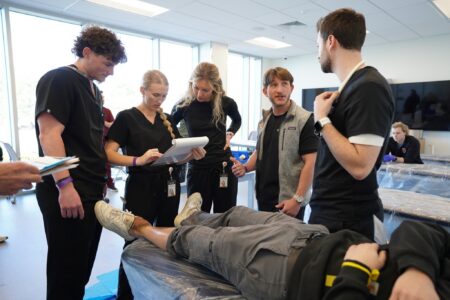
Practice manual techniques on peers under faculty supervision.
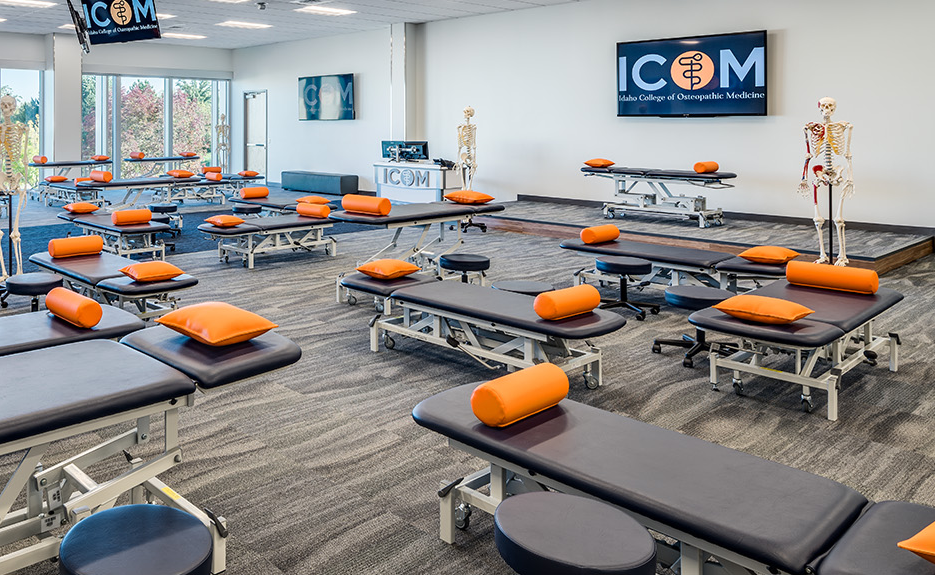
The Osteopathic Manipulative Medicine (OMM) Lab, located on the second floor of ICOM, is a key component in the training of all future Doctors of Osteopathic Medicine (DOs). In this lab, osteopathic medical students learn the art of physical examination and develop palpatory skills that assist in diagnosing medical conditions and treating musculoskeletal dysfunction.
The lab is designed as an interactive learning environment, giving students the opportunity to perform hands-on treatments. It accommodates 40 hydraulic physical therapy tables for students to practice techniques, with abundant natural light streaming through the floor-to-ceiling north-facing windows. Seven high-definition monitors and multiple cameras allow students to clearly view demonstrations from any point in the room, ensuring a rich learning experience.
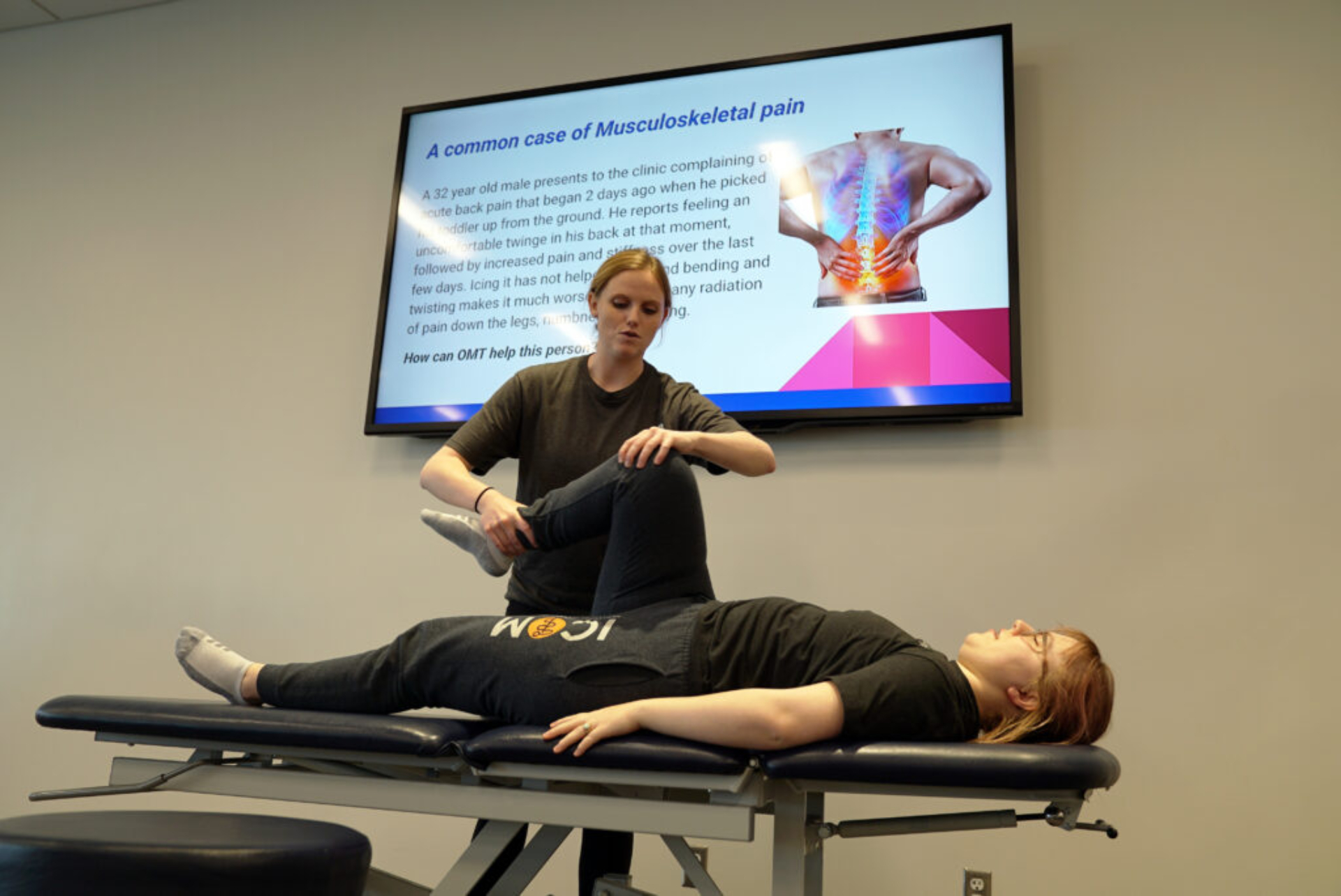
Osteopathic Manipulative Medicine (OMM) is a hands-on health care approach used by DOs to diagnose and treat structural and functional issues in the body. Through palpation (i.e. gentle pressure) and manipulation of muscles and joints as well as soft tissue manipulation, OMM helps relieve pain (including neck pain and menstrual pain), improve mobility, and support the body’s natural tendency to heal.
OMM treatments are complementary to traditional medicine and medical care, often used to treat musculoskeletal pain, inflammation, and other conditions. By practicing OMM, students gain essential skills to evaluate and manage patient concerns effectively and safely. After completing their training and becoming fully licensed physicians, they will be better able to develop treatment plans that relieve pain. In some instances, their plans may bypass the need to perform surgery or prescribe medications.
Osteopathic Manipulative Treatment (OMT) is the category of hands-on health care techniques used within OMM. Osteopathic physicians apply OMT to diagnose, treat, and prevent illness or injury, using manual approaches to support overall health.
Osteopathic Manipulative Treatment is a critical part of the Osteopathic Principles & Practice (OPP) curriculum at ICOM, which encompasses the philosophy, history, and concepts of osteopathic medicine. Students receive approximately 250 hours of hands-on OMM treatments, building confidence in a variety of physical therapy techniques, including muscle energy, soft tissue, and high-velocity low-amplitude (HVLA) manipulations.
OMT can be applied in clinical and hospital settings, and in some cases, may serve as an alternative to prescribing medication or performing surgery, particularly for musculoskeletal issues (sports injuries, etc.). This training prepares students to incorporate manual therapies safely and effectively alongside conventional medical treatments for pain relief.
Osteopathic medicine emphasizes the interconnectedness of the musculoskeletal system with overall health. Through OMM and OMT, DOs can identify and treat pain, structural imbalances, and reduced mobility, while promoting optimal body function.
The ICOM OMM Lab allows students to practice techniques in a controlled, supervised environment, helping them develop the skills necessary for clinical rotations and patient care. Students learn to observe, palpate, and treat the musculoskeletal system, integrating these skills into a whole-person approach to health.
Students in the OMM Lab will:
Practice manual techniques on peers under faculty supervision.
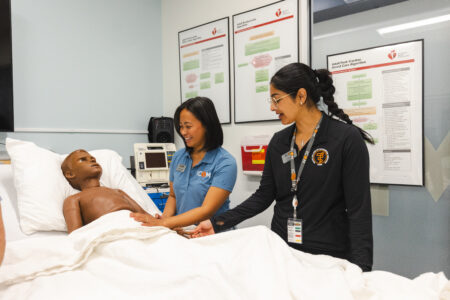
Observe Osteopathic Manipulative Treatment (OMT) demonstrations on high-definition monitors and cameras.
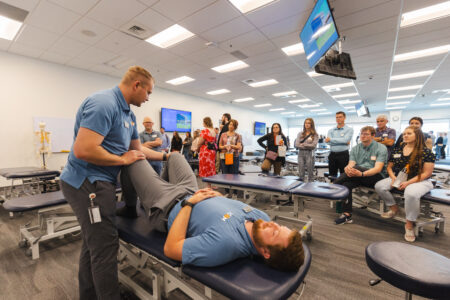
Develop palpation and diagnostic skills essential for patient care.
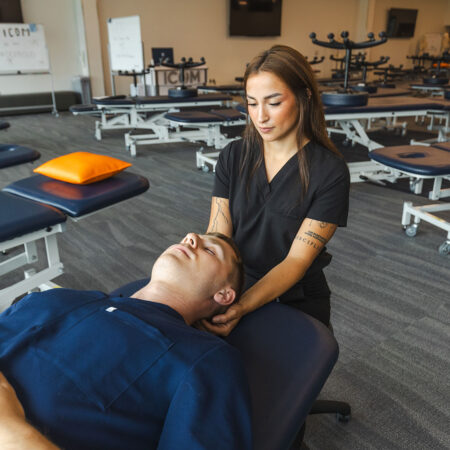
Gain confidence in applying Osteopathic Manipulative Treatment methods in real-world clinical scenarios.
This immersive training ensures that ICOM graduates become osteopathic physicians who are prepared to use Osteopathic Manipulative Medicine as an integral part of osteopathic care. In this way, OMM training will help improve patient outcomes through a combination of knowledge, skill, and clinical reasoning.
ICOM’s DO program emphasizes whole-person care, considering the body, mind, and spirit in patient management. Prevention, wellness, and a holistic view of health are central to the osteopathic philosophy. The OMM Lab provides students with practical tools to apply this philosophy by directly manipulating the musculoskeletal system and understanding its impact on overall health.
The OMM Lab at ICOM is a dedicated learning space where students practice Osteopathic Manipulative Medicine (OMM) and Osteopathic Manipulative Treatment (OMT) techniques. It features 40 hydraulic tables, floor-to-ceiling windows, and high-definition monitors to provide hands-on training in a bright, interactive environment.
ICOM students receive approximately 250 hours of hands-on OMM training throughout the pre-clinical years, helping them develop palpation, diagnostic, and manipulation skills under faculty supervision.
Students practice a variety of OMT techniques, including:
All techniques are supervised by faculty to ensure safe and effective learning.
OMM and OMT are part of Osteopathic Principles & Practice (OPP) courses. Students apply knowledge from lectures directly in the OMM Lab, building skills that will be used in clinical rotations, patient care, and board exam preparation.
Yes. OMM and OMT can sometimes be used as a non-invasive alternative or complement to pain medication, particularly for musculoskeletal pain, by addressing structural issues and improving overall body function
The lab is designed for interactive, hands-on learning with:
This setup allows students to observe, practice, and refine their OMM skills in a supportive environment.
All OMM Lab sessions are conducted under the guidance of experienced faculty in the Osteopathic Principles & Practice department, ensuring safe practice and high-quality instruction.
Hands-on training in the OMM Lab helps students: